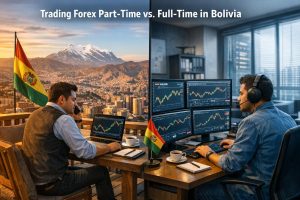
Trading Forex Part-Time vs. Full-Time in Bolivia
Understanding Forex Trading in Bolivia



Forex trading, or foreign exchange trading, involves the simultaneous buying of one currency and selling of another, with the objective of profiting from changes in exchange rates. In Bolivia, interest in Forex trading has grown steadily as access to online platforms and international brokers has expanded. Individuals are increasingly exploring this market as either a supplemental source of income or a primary professional activity. Understanding how Forex trading functions within the Bolivian context requires attention to economic conditions, regulatory oversight, technological access, and personal financial objectives.
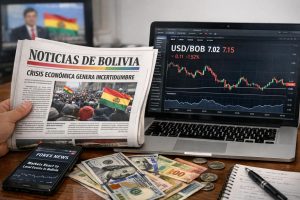
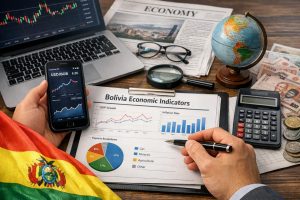
Bolivia’s economic structure, characterized by a combination of state involvement and market activity, shapes how individuals approach international financial markets. Although the domestic currency, the Boliviano (BOB), is relatively stable compared to some neighboring currencies, most Forex trading in Bolivia involves major global currency pairs such as EUR/USD, USD/JPY, and GBP/USD. This reliance on external currency pairs means that Bolivian traders must pay close attention to global economic indicators, geopolitical developments, and monetary policy decisions in major economies.
Accessibility and Technological Requirements
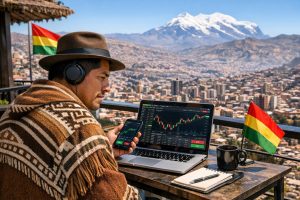
Participation in Forex trading from Bolivia is largely dependent on internet access and the availability of reliable trading platforms. Over recent years, improvements in digital infrastructure have made it easier for individuals to connect to international brokers. Most traders use online platforms that provide real-time price charts, technical analysis tools, and order execution features.
To begin trading, individuals typically need a trading account with a broker, a secure internet connection, and a device such as a computer or smartphone. Many brokers offer demo accounts, which allow users to simulate trading without financial risk. This feature is particularly relevant for beginners in Bolivia who are still developing familiarity with market behavior and trading strategies.
Another important aspect of accessibility is the ability to deposit and withdraw funds. Since Forex trading often involves international transactions, Bolivian traders must consider currency conversion fees, payment processing times, and the compatibility of local banking systems with global financial networks.
Part-Time Forex Trading
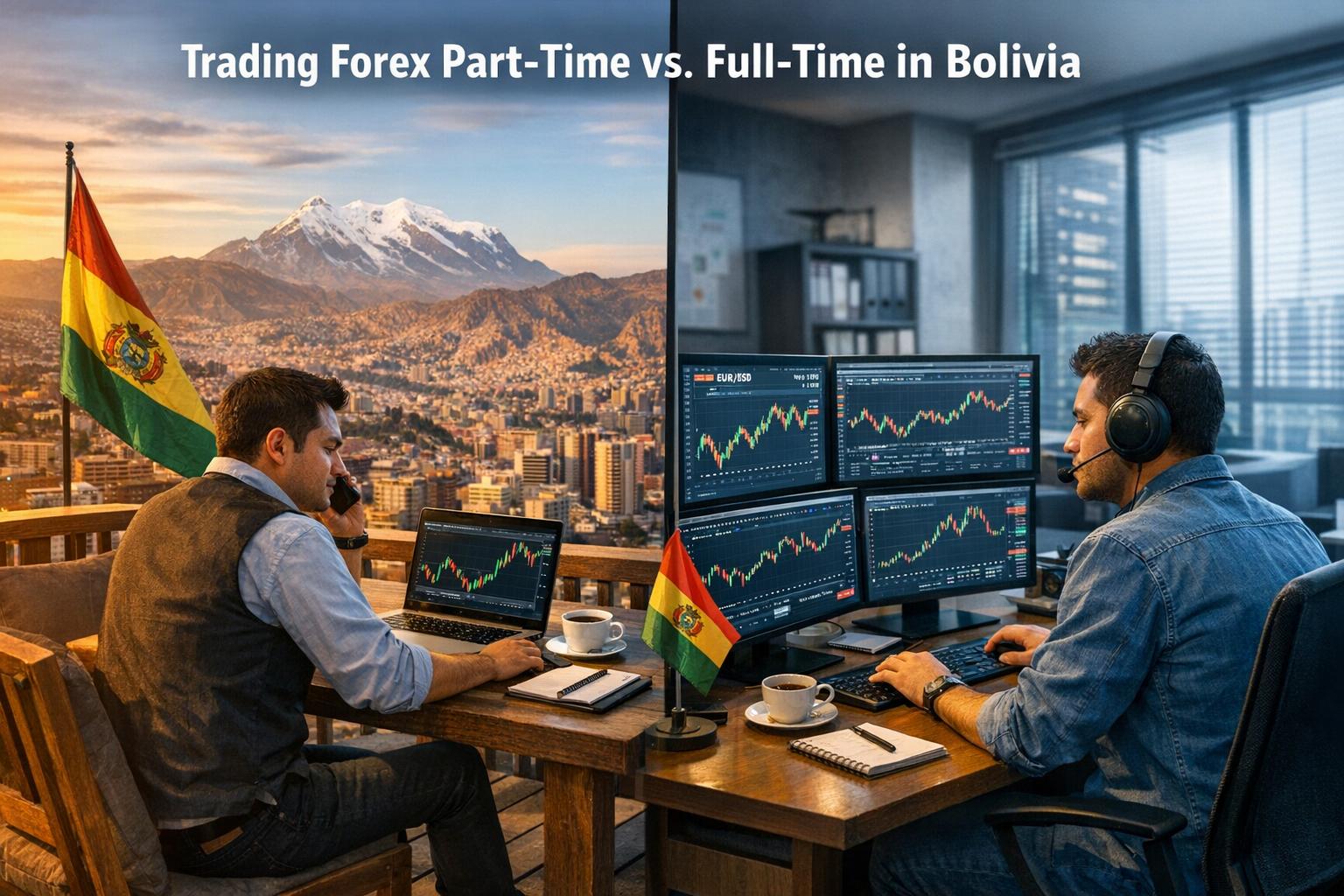
Engaging in Forex trading on a part-time basis allows individuals to integrate trading into their daily routines without abandoning existing employment or educational commitments. This approach is common among those who view Forex as a supplementary income stream rather than a primary occupation.
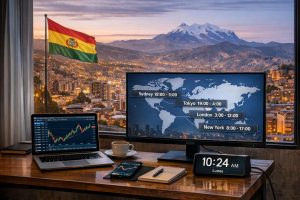
One of the main characteristics of part-time trading is the selective use of time. Traders may focus on specific market sessions, such as the overlap between the London and New York sessions, when liquidity and volatility tend to be higher. By concentrating on defined periods, part-time traders attempt to maximize efficiency while minimizing the time commitment required.
The flexibility associated with part-time trading is particularly relevant in Bolivia, where individuals may have diverse professional responsibilities. Being able to trade during evenings or early mornings allows traders to participate in global markets without disrupting their primary source of income. This flexibility also enables gradual skill development, as traders can learn through experience without facing immediate financial pressure.
However, part-time trading requires careful planning. Limited screen time means that traders cannot monitor the market continuously, which may result in missed opportunities or delayed reactions to sudden price movements. To address this, many part-time traders utilize tools such as stop-loss orders and take-profit levels to manage trades automatically.
Time management also plays a significant role. Balancing trading with work, family, and other responsibilities can be challenging. Without a structured schedule, traders may struggle to maintain consistency in their approach, which can affect performance over time.
Skill Development and Learning Curve
For part-time traders, the learning process is gradual. Developing an understanding of technical analysis, fundamental analysis, and risk management requires consistent effort over an extended period. Educational resources, including online courses, webinars, and market analysis reports, are widely available and can support this process.
In Bolivia, where formal education in financial trading may be limited, self-directed learning becomes particularly important. Traders often rely on international resources to gain insights into market behavior and strategy development. Keeping a trading journal is a common practice that helps individuals track performance, identify patterns, and refine their approach.
The incremental nature of part-time trading allows individuals to test different strategies without substantial financial exposure. Over time, traders can evaluate what works best for their specific circumstances and adjust accordingly.
Full-Time Forex Trading
Full-time Forex trading involves dedicating the majority of one’s working hours to analyzing markets, executing trades, and managing risk. Individuals who pursue this path typically aim to generate a consistent income from trading activities.
A defining feature of full-time trading is the level of commitment required. Traders must monitor markets across multiple sessions, stay informed about global economic developments, and continuously refine their strategies. This level of engagement allows for a more comprehensive understanding of market dynamics and can improve decision-making.
In Bolivia, transitioning to full-time trading requires careful consideration of financial stability. Since trading income can be variable, having sufficient capital and savings is essential to manage periods of lower profitability. Unlike traditional employment, Forex trading does not guarantee regular income, which introduces an additional layer of financial uncertainty.
Full-time traders often develop structured routines that include market analysis, trade execution, and performance review. This disciplined approach is necessary to maintain consistency and manage the psychological challenges associated with trading.
Risk Management Practices
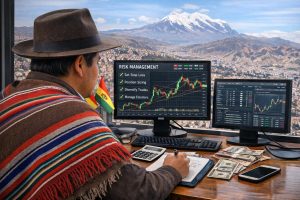
Risk management is a central aspect of both part-time and full-time Forex trading, but it becomes particularly critical for those relying on trading as a primary income source. Effective risk management involves setting limits on potential losses, determining appropriate position sizes, and avoiding excessive leverage.
In the context of Bolivia, where access to high leverage through international brokers may be available, traders must exercise caution. While leverage can amplify profits, it also increases the potential for significant losses. Understanding how to balance risk and reward is essential for long-term sustainability.
Common risk management techniques include the use of stop-loss orders, diversification across currency pairs, and maintaining a risk-to-reward ratio that aligns with overall trading goals. Traders who neglect these practices may experience substantial financial setbacks.
Psychological Factors in Trading
The psychological dimension of Forex trading is often underestimated. Both part-time and full-time traders must manage emotions such as fear, impatience, and overconfidence. These factors can influence decision-making and lead to inconsistent results.
For part-time traders, emotional pressures may be less intense due to the presence of alternative income sources. However, balancing trading with other responsibilities can introduce stress related to time constraints. Full-time traders, on the other hand, may experience greater psychological pressure due to the reliance on trading income.
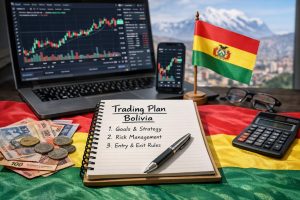
Developing discipline and maintaining a structured trading plan can help mitigate these challenges. Many experienced traders emphasize the importance of adhering to predefined strategies rather than reacting impulsively to market fluctuations.
The Regulatory Environment in Bolivia
Forex trading activities in Bolivia are influenced by the regulatory framework established by the Autoridad de Supervisión del Sistema Financiero (ASFI). This संस्था oversees financial institutions and ensures compliance with national laws designed to protect consumers and maintain market integrity.
While Forex trading itself is not prohibited, the regulatory environment emphasizes caution when dealing with international brokers. Bolivian traders must ensure that the brokers they choose operate under recognized regulatory authorities in their respective jurisdictions. This reduces the risk of fraud and enhances transparency in trading operations.
Additionally, there may be restrictions or reporting requirements related to international financial transactions. Traders should be aware of these obligations and ensure compliance to avoid potential legal or financial complications.
Understanding both local and international regulations is important because Forex trading inherently involves cross-border transactions. Staying informed about changes in regulatory policies can help traders adapt their strategies and maintain compliance.
Choosing Between Part-Time and Full-Time Trading
Deciding whether to engage in Forex trading on a part-time or full-time basis depends on several factors, including financial resources, experience level, and personal objectives. Each approach presents distinct advantages and challenges, and the suitability of either option varies from one individual to another.
Part-time trading is often more appropriate for beginners or those seeking additional income without significant financial risk. It allows for gradual skill development and provides a level of financial security through alternative income sources. This approach aligns well with individuals who prefer a cautious entry into the Forex market.
Full-time trading, by contrast, requires a higher degree of preparation and commitment. It is generally more suitable for individuals with substantial trading experience, adequate capital, and a clear understanding of risk management principles. The potential for higher returns exists, but it is accompanied by increased financial uncertainty.
In Bolivia, where economic conditions and access to financial resources can vary, the decision between part-time and full-time trading should be made based on realistic assessments rather than expectations of rapid profitability.
Conclusion
Forex trading in Bolivia represents an opportunity for individuals to engage with global financial markets from a local context. Whether pursued on a part-time or full-time basis, it requires a combination of technical knowledge, disciplined execution, and awareness of regulatory requirements.
Part-time trading offers flexibility and a gradual learning curve, making it accessible to a wide range of individuals. Full-time trading, while potentially more rewarding, demands a higher level of commitment and exposes traders to greater financial and psychological pressures.
A careful evaluation of personal circumstances, including financial stability, time availability, and risk tolerance, is essential when choosing between these approaches. By maintaining a structured strategy and adhering to sound risk management practices, traders in Bolivia can navigate the complexities of the Forex market with greater confidence and consistency.
This article was last updated on: June 25, 2026