Risk Management Tips for Bolivian Forex Traders
Understanding the Bolivian Forex Market



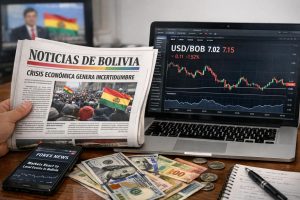
The foreign exchange market operates as a decentralized global system where currencies are traded continuously across financial centers. For traders in Bolivia, participation in this market involves more than simply predicting currency movements. It requires a practical understanding of how international dynamics intersect with domestic economic realities. Bolivia’s financial environment, characterized by a managed exchange rate system and regulatory oversight, creates a distinct framework within which Forex activity must be approached.
Unlike fully liberalized economies, Bolivia maintains a relatively stable exchange rate through central bank interventions. This stability can reduce some types of currency volatility, but it also introduces structural considerations. Traders must recognize that local currency movements may not reflect global Forex trends in the same way as freely floating currencies. As a result, strategies that work in other regions may need to be adjusted to align with Bolivia’s specific monetary policies.
Additionally, access to international brokerage platforms has expanded opportunities for Bolivian traders. However, this access comes with exposure to global market volatility, geopolitical events, and macroeconomic shocks. Understanding how these forces influence major currency pairs such as EUR/USD or USD/JPY is just as important as monitoring domestic indicators. Effective participation depends on balancing both perspectives.
Key Risk Management Strategies
Conduct Thorough Market Research
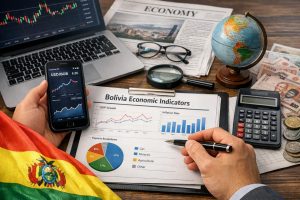
Market research forms the foundation of informed Forex trading. For Bolivian traders, this involves analyzing a combination of global and local economic data. Key global indicators include inflation trends in major economies, interest rate decisions by central banks such as the Federal Reserve, and employment data releases. These factors often drive significant movements in currency prices.
On the domestic side, traders should pay attention to Bolivia’s fiscal policy, commodity exports, and monetary policies set by the Central Bank of Bolivia. Because the country’s economy is closely tied to natural resources, fluctuations in commodity prices can indirectly influence financial stability and liquidity conditions.
Incorporating both fundamental analysis and technical analysis provides a more comprehensive view of the market. Fundamental analysis helps assess the underlying economic forces, while technical analysis focuses on price patterns, trends, and indicators. Combining these approaches can improve decision-making and reduce the likelihood of relying on incomplete information.
Utilize Stop-Loss Orders
One of the most practical tools available to Forex traders is the stop-loss order. This mechanism automatically closes a trading position when the market reaches a predefined price level. Its primary function is to limit potential losses in situations where the market moves against a trader’s position.
In volatile market conditions, prices can shift rapidly due to economic announcements, geopolitical developments, or sudden changes in investor sentiment. Without a stop-loss order, losses can escalate quickly, particularly for traders using leverage. By setting clear exit points, traders establish boundaries that protect their capital and maintain long-term sustainability.
Effective use of stop-loss orders involves more than simply setting arbitrary limits. Traders should place stop-loss levels based on market structure, such as support and resistance zones, rather than emotional tolerance alone. This ensures that trades are given sufficient room to develop while still maintaining protection against large losses.
Diversify Investments
Diversification reduces exposure to any single market movement. In Forex trading, this can involve spreading capital across multiple currency pairs, including both major and minor pairs. For example, combining trades in highly liquid pairs with positions in less correlated currencies can help balance risk.
Bolivian traders may also consider diversifying beyond currency pairs by exploring related financial instruments such as commodities or indices, depending on broker availability. Since Bolivia’s economy is influenced by commodity exports, exposure to global commodity markets can provide additional context and hedging opportunities.
However, diversification should be approached with careful planning. Holding too many positions simultaneously can dilute focus and make risk management more complex. The objective is to achieve balance rather than excessive dispersion of capital.
Leverage with Caution
Leverage is a defining feature of Forex trading, allowing traders to control large positions with a relatively small amount of capital. While this can amplify profits, it equally increases the potential for significant losses. Misuse of leverage is one of the most common causes of account depletion among inexperienced traders.
For Bolivian traders, cautious use of leverage is particularly important due to external market exposure. Even if local currency fluctuations are stable, global currency pairs can experience sharp movements. A highly leveraged position can magnify these movements beyond manageable levels.
Prudent traders typically use lower leverage ratios and calculate position sizes based on their total account balance and predefined risk tolerance. This approach ensures that no single trade has the potential to cause disproportionate damage.
Understand Regulatory Requirements
Operating within the appropriate legal framework is essential for financial security and long-term participation in Forex trading. Bolivia’s regulatory environment emphasizes financial stability and consumer protection, which extends to currency-related activities.
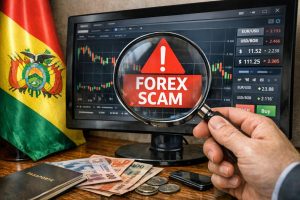
Traders should verify whether their chosen brokers comply with recognized international regulatory standards. Working with regulated brokers reduces the risk of fraud, ensures transparency in pricing, and provides mechanisms for dispute resolution. It also helps ensure that funds are handled according to established financial safeguards.
In addition to broker selection, understanding taxation policies and reporting obligations is important. Forex trading profits may be subject to specific tax treatments, and compliance with these requirements helps avoid legal complications. Awareness of currency controls and cross-border transaction rules is equally relevant when transferring funds between accounts.
Engage in Continuous Learning
The Forex market is constantly evolving due to technological advancements, policy changes, and shifting global economic conditions. Traders who rely solely on initial knowledge may find their strategies becoming less effective over time. Continuous learning is therefore an essential component of risk management.
Educational resources such as webinars, trading simulations, and analytical reports provide opportunities to refine skills and adapt to new market environments. Participation in trading communities can also facilitate the exchange of ideas and insights, although information should always be evaluated critically before application.
Developing expertise takes time and consistent practice. Traders benefit from reviewing past trades, identifying patterns in their decisions, and making incremental improvements. This process contributes to a more disciplined and informed approach to market participation.
Psychological Aspects of Trading
Maintain Emotional Discipline
Psychological factors influence trading outcomes as much as technical knowledge. Emotional responses such as fear and overconfidence can interfere with rational decision-making. For example, fear of losses may lead to premature trade exits, while overconfidence may encourage excessive risk-taking.
Maintaining discipline involves adhering to predefined strategies regardless of short-term market fluctuations. This requires a structured approach in which decisions are guided by analysis rather than impulses. Traders who develop consistency in their behavior are better positioned to manage uncertainty and avoid erratic performance.
Practical techniques such as setting clear trading schedules, limiting trading frequency, and taking breaks after significant losses can help maintain psychological balance. The objective is to create an environment where decisions are deliberate and controlled.
Implement a Consistent Trading Plan
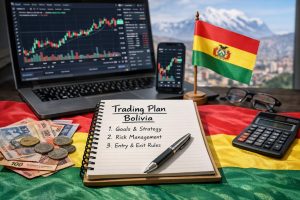
A trading plan serves as a structured framework for participation in the Forex market. It defines the criteria for entering and exiting trades, risk limits, and overall objectives. For Bolivian traders, a well-developed plan provides stability in an environment influenced by both local and global factors.
An effective trading plan incorporates risk-reward ratios, position sizing rules, and clear evaluation metrics. By defining these elements in advance, traders reduce the likelihood of making decisions based on short-term market noise. Consistency in applying the plan is as important as the plan itself.
Regular evaluation of trading performance helps identify areas for improvement. Adjustments should be based on documented results rather than assumptions. Over time, this iterative process contributes to more refined and effective strategies.
Broader Considerations for Bolivian Traders
Technology and Market Access
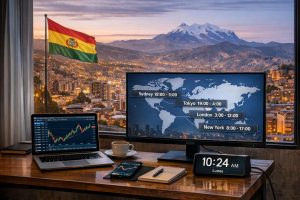
Advancements in technology have significantly improved access to Forex markets. Online trading platforms provide real-time data, analytical tools, and automated trading capabilities. For Bolivian traders, reliable internet connectivity and platform familiarity are essential for timely execution of trades.
Choosing a platform with intuitive navigation and robust analytical features can enhance efficiency. Features such as chart customization, economic calendars, and risk management tools support more informed decision-making. Ensuring that the platform operates smoothly under varying market conditions is equally important.
Currency Correlations and External Influences
Understanding how different currency pairs interact can provide additional context for trading decisions. Certain currencies tend to move in correlation due to shared economic factors or trade relationships. Recognizing these relationships helps in managing exposure and avoiding unintended concentration of risk.
External influences such as geopolitical developments, international trade agreements, and global financial crises can also affect currency markets. Bolivian traders should remain aware of these broader dynamics, as they can create ripple effects that extend across multiple markets.
Capital Preservation as a Priority
While profit generation is a primary objective, long-term success in Forex trading depends on capital preservation. Protecting trading capital ensures that traders can continue participating in the market and adapting their strategies over time.
This perspective shifts the focus from short-term gains to sustainable growth. By controlling losses and maintaining disciplined risk management practices, traders create a more stable foundation for achieving consistent results.
Conclusion
Forex trading in Bolivia presents a combination of opportunities and constraints shaped by both global market forces and domestic economic policies. Success in this environment depends on a structured approach that prioritizes risk management, informed decision-making, and continuous adaptation.
By integrating thorough market research, disciplined use of trading tools, diversification, and cautious leverage, traders can reduce exposure to unnecessary risks. Complementing these strategies with a strong understanding of regulatory requirements and ongoing education further enhances resilience.
Equally important are the psychological and procedural aspects of trading. Maintaining emotional discipline and adhering to a consistent trading plan contribute to stability in an inherently uncertain market. Over time, these practices support more measured and sustainable participation in the Forex market.
Ultimately, effective risk management is not a single technique but a comprehensive framework. For Bolivian traders, aligning this framework with both local conditions and global dynamics is essential for navigating the complexities of Forex trading.
This article was last updated on: May 22, 2026