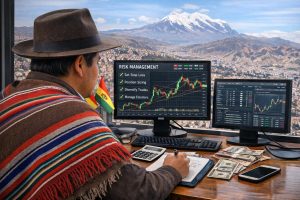
How to Use Leverage Safely in Bolivia
Understanding Leverage


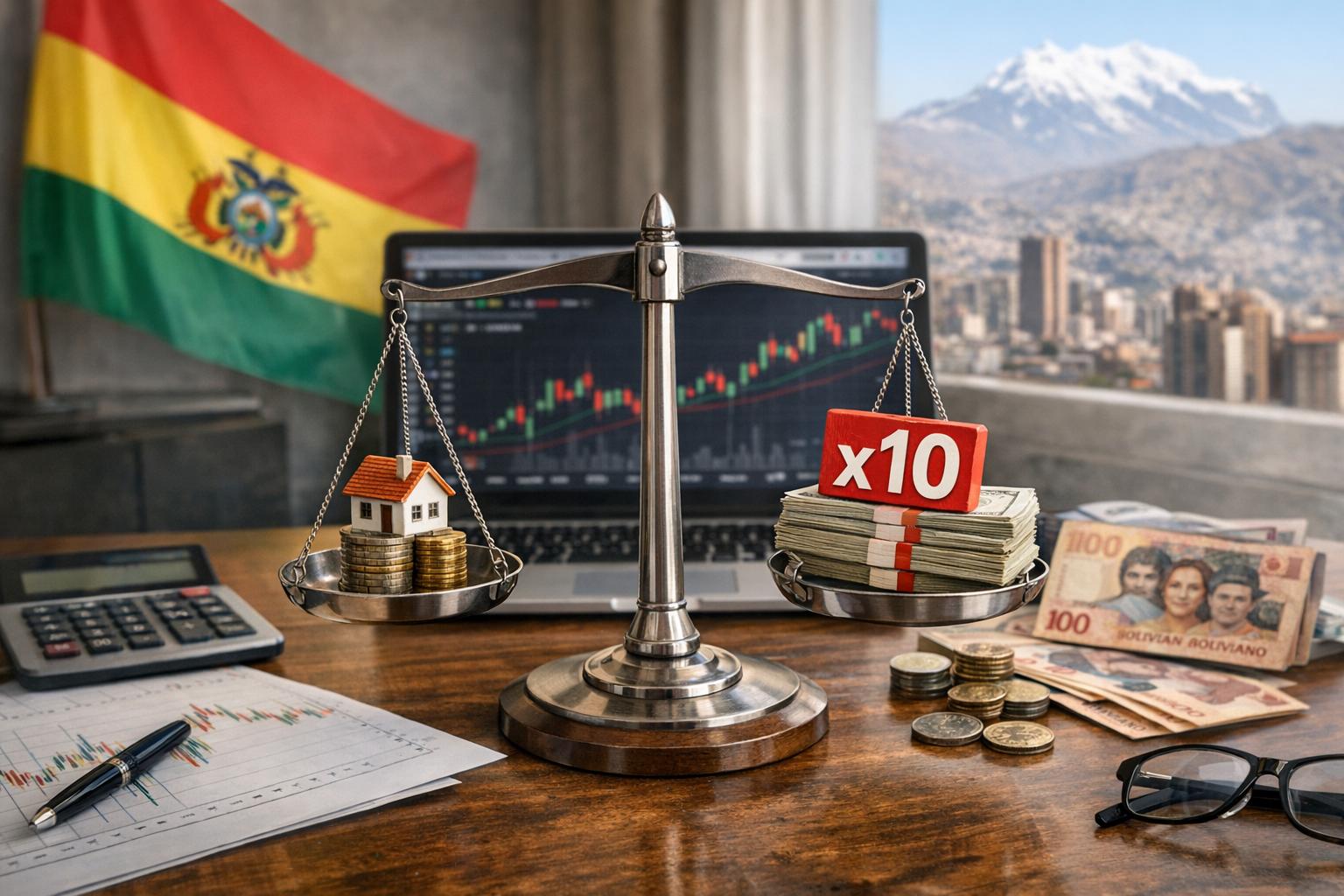
In financial terms, leverage refers to the use of borrowed capital or financial instruments to increase the potential return on an investment. Instead of relying solely on personal funds, an investor can access additional capital through loans, margin accounts, or derivative products. This allows participation in larger positions than would otherwise be possible. While this can enhance returns when markets move favorably, it also increases exposure to losses when market conditions shift in the opposite direction.
Leverage is commonly associated with trading environments such as equities, commodities, and foreign exchange markets. In Bolivia, the use of leverage remains more limited compared to larger international markets, but it still plays a role among experienced investors who engage with forex platforms or international brokerage services. As financial globalization continues, access to leveraged instruments has expanded, making it increasingly relevant for Bolivian investors to understand both its benefits and risks.
The mechanics of leverage are relatively straightforward. An investor provides a portion of the total investment amount, known as the margin, while a broker or financial institution supplies the remainder. For example, a leverage ratio of 1:10 allows an investor to control a position worth ten times their initial capital. This magnification affects both gains and losses proportionally, which underscores the importance of disciplined usage.
Initial Considerations Before Using Leverage
Before applying leverage in any financial context, it is necessary to evaluate personal financial readiness and market familiarity. In Bolivia, the financial ecosystem differs from those in larger economies, particularly in terms of market size, liquidity, and accessibility of instruments. These differences should inform any decision involving leverage.
Investors need to assess their tolerance for financial risk, as leveraged positions can fluctuate rapidly in value. Even small market movements can result in significant changes in account balances. This characteristic makes leverage unsuitable for individuals without sufficient capital buffers or those who cannot actively monitor their positions.
Equally important is understanding how leverage interacts with different asset classes. Some markets are inherently more volatile than others, and the degree of leverage that might be manageable in one context could be excessive in another. Therefore, selecting the appropriate level of leverage requires a combination of market knowledge and personal financial discipline.
Local Regulations
Bolivia’s financial system is regulated by institutions such as the Autoridad de Supervisión del Sistema Financiero (ASFI). These regulatory bodies establish rules intended to maintain market stability and protect investors. While leveraged trading is not as institutionalized as in major global markets, Bolivian investors who access international platforms must still ensure compliance with both local and foreign regulations.
Regulations may influence how margin accounts are structured, the maximum leverage ratios available, and the level of disclosure required from financial service providers. In some cases, brokers operating internationally may offer higher leverage than what would typically be considered prudent under local standards. This discrepancy places additional responsibility on the investor to exercise caution.
Understanding brokerage agreements is also essential. Fees, interest on borrowed funds, and margin requirements can vary significantly between providers. These costs can accumulate over time and affect overall profitability, particularly in positions held over longer periods.
Market Volatility
Market volatility is a critical factor when using leverage. In Bolivia, economic conditions can be influenced by commodity prices, particularly natural gas and minerals, as well as domestic fiscal and monetary policies. Political developments may also contribute to short-term fluctuations in asset prices.
Leverage amplifies the impact of this volatility. A price movement that might be considered minor in an unleveraged position can lead to substantial gains or losses when leverage is applied. For instance, a 2% market decline can translate into a 20% loss under a 1:10 leverage ratio. This dynamic requires investors to remain attentive to both local and global developments that could affect market behavior.
External factors, such as changes in international interest rates or shifts in global risk sentiment, can also influence markets accessible to Bolivian investors. Since many leveraged trading opportunities involve foreign assets, understanding these broader trends becomes essential for risk control.
Strategies for Using Leverage Safely
Using leverage effectively requires a structured approach grounded in analysis, discipline, and risk awareness. While it is not possible to eliminate risk entirely, certain practices can help reduce exposure and improve decision-making.
Educate Yourself
A thorough understanding of financial markets forms the foundation of responsible leverage use. This includes knowledge of technical analysis, fundamental analysis, and the specific features of leveraged instruments such as margin requirements and liquidation thresholds.
Education can take multiple forms, including formal courses, independent study, and practical experience through simulated trading environments. Many platforms offer demo accounts where investors can practice using leverage without committing real capital. This approach allows individuals to observe how leveraged positions behave under different market conditions.
In addition to technical knowledge, investors should become familiar with the operational aspects of trading platforms. This includes order execution, margin calls, and account maintenance procedures. Misunderstanding these elements can lead to unintended losses, regardless of market direction.
Risk Management
Risk management is a central component of any leveraged strategy. Without effective controls, the probability of sustaining significant losses increases substantially. One widely used tool is the stop-loss order, which automatically closes a position when it reaches a predetermined loss level. This mechanism helps limit downside exposure and prevents losses from escalating beyond acceptable levels.
Position sizing is another important factor. Allocating only a portion of available capital to each trade reduces the risk associated with any single position. This approach ensures that even if one trade performs poorly, it does not jeopardize the entire portfolio.
Monitoring margin levels is equally critical. When account equity falls below a specified threshold, brokers may issue a margin call, requiring additional funds or automatically closing positions. Maintaining sufficient margin reduces the likelihood of forced liquidation during periods of volatility.
Diversification
Diversification involves spreading investments across multiple assets or markets to reduce overall risk. In the context of leverage, diversification can help offset losses in one position with gains in another, although it does not guarantee profitability.
Investors in Bolivia may consider diversifying across different asset classes, such as currencies, commodities, or international equities, depending on accessibility. Each asset class responds differently to economic factors, which can help balance portfolio performance over time.
It is important to note that diversification should be implemented thoughtfully. Simply holding multiple leveraged positions does not automatically reduce risk, especially if those positions are highly correlated. Careful selection of assets based on independent drivers is necessary to achieve meaningful diversification.
Psychological Considerations
Leverage not only affects financial outcomes but also influences investor behavior. The potential for amplified gains can encourage overconfidence, while rapid losses may lead to impulsive decision-making. Maintaining a disciplined approach is essential to avoid these pitfalls.
Emotional responses to market fluctuations can interfere with rational analysis. For example, increasing leverage after a series of losses in an attempt to recover quickly can result in greater financial exposure. Similarly, holding onto losing positions in the hope of a reversal may compound losses.
Developing a structured trading plan can help mitigate these behavioral risks. Such a plan typically includes predefined entry and exit criteria, risk limits, and performance evaluation methods. Adherence to this framework promotes consistency and reduces the influence of short-term emotions.
Technological and Access Considerations
Access to leveraged trading in Bolivia often depends on digital platforms provided by international brokers. These platforms offer a range of tools, including real-time data, charting software, and automated trading options. Familiarity with these tools can enhance decision-making and execution efficiency.
However, reliance on technology also introduces certain risks. Connectivity issues, platform outages, or delays in order execution can affect trading outcomes, particularly in fast-moving markets. Investors should be aware of these limitations and consider them when planning their strategies.
Security is another important aspect. Ensuring that brokerage accounts are protected through secure authentication methods helps safeguard funds and personal information. Selecting reputable brokers with transparent practices is a necessary step in managing operational risk.
Long-Term Perspective
While leverage is often associated with short-term trading, it can also be applied in longer-term investment strategies. However, extended use of leverage introduces additional considerations, such as financing costs and sustained exposure to market fluctuations.
Interest charges on borrowed capital can accumulate over time, reducing net returns. Additionally, long-term leveraged positions remain vulnerable to unexpected market events, which may occur outside regular monitoring periods. These factors make leverage more complex in a long-term context compared to unleveraged investments.
Adopting a balanced perspective is beneficial. Rather than relying exclusively on leverage, investors may integrate it selectively within a broader portfolio strategy. This approach allows participation in opportunities that require additional capital while maintaining overall financial stability.
Conclusion
Leverage is a financial mechanism that enables investors to expand their market exposure beyond their initial capital. In Bolivia, its use is shaped by local regulatory frameworks, market characteristics, and access to international trading platforms. While leverage offers the potential for enhanced returns, it also introduces significant risks that must be carefully managed.
A clear understanding of market dynamics, regulatory requirements, and financial instruments is essential before engaging in leveraged activities. Risk management practices, including stop-loss orders, position sizing, and diversification, play a central role in limiting potential losses. Additionally, attention to psychological and technological factors can further contribute to more consistent outcomes.
When approached with discipline and informed judgment, leverage can serve as a useful component within an investment strategy. However, it requires ongoing evaluation and a commitment to responsible financial decision-making in order to be used effectively.
This article was last updated on: May 8, 2026