Understanding Margin Calls in Forex Trading
Introduction to Margin Calls in Forex Trading




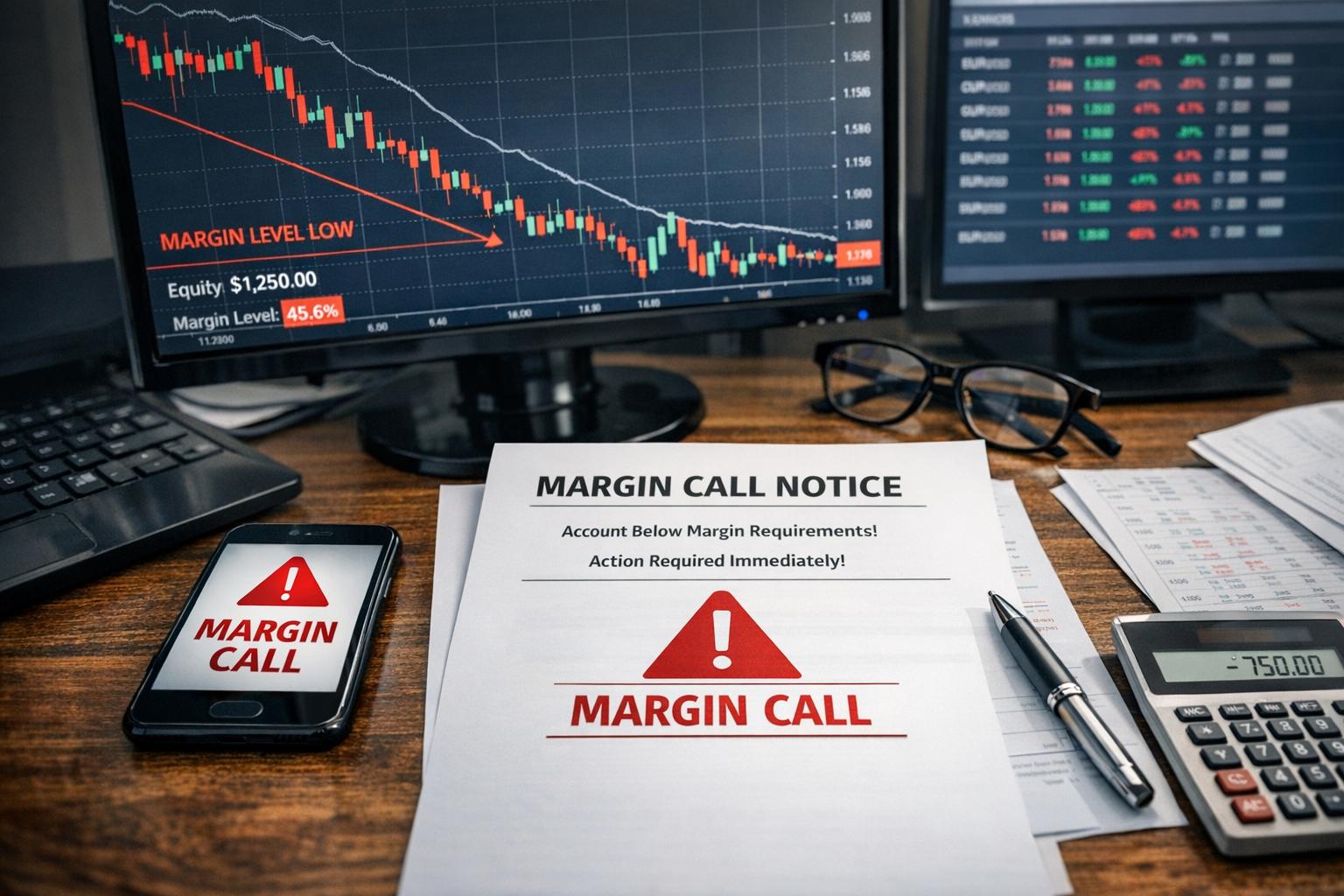
In the world of forex trading, understanding the mechanics and implications of margin calls is a foundational requirement for anyone participating in leveraged markets. A margin call occurs when a trader’s account equity falls below the minimum level required to maintain open positions. This situation is not unusual in volatile currency markets, where price changes can be rapid and significant. When a margin call is triggered, the trader must act quickly to restore the account to the broker’s required level, either by depositing additional funds or by reducing exposure through closing positions.
Margin calls are closely tied to leverage, which amplifies both profit potential and risk. Traders who lack a clear understanding of how leverage interacts with margin requirements may unintentionally expose themselves to rapid account depletion. A structured understanding of how margin is calculated, how equity fluctuates, and how brokers enforce margin requirements is necessary to navigate these risks effectively.
What is a Margin in Forex Trading?
In forex trading, margin is the amount of capital that a trader must allocate as collateral to open and maintain a leveraged position. It is not a fee or a cost in the traditional sense, but rather a portion of the trader’s funds set aside by the broker to support open trades. This system allows traders to control a larger position than their deposited capital would otherwise permit.
For example, with a leverage ratio of 1:100, a trader can control a position worth 100,000 units of currency with just 1,000 units of account equity. While this magnifies the potential for gains, it also means that even small unfavorable price movements can have a disproportionate effect on the trader’s account balance.
There are several key components related to margin that traders must understand. Used margin refers to the funds currently allocated to open positions, while free margin represents the remaining funds available to open new trades or absorb losses. Equity is the real-time value of the account, including both the balance and any unrealized profit or loss from active trades. The relationship between these values determines whether a margin call is likely.
How Does Leverage Influence Margin?
Leverage is central to the concept of margin. It determines how much exposure a trader can gain relative to their actual capital. Higher leverage reduces the margin required per trade but increases sensitivity to price changes. Lower leverage requires more capital but offers a greater buffer against volatility.
For instance, with 1:50 leverage, a trader must commit more capital to control a given position size compared to 1:200 leverage. While high leverage can seem attractive due to lower entry requirements, it also reduces the margin for error. A small adverse price move can quickly reduce equity to dangerous levels, increasing the likelihood of a margin call.
Brokers set specific margin requirements depending on regulatory frameworks, account types, and the currency pairs being traded. Major currency pairs often have lower margin requirements, while exotic pairs or volatile instruments may require higher collateral.
How Does a Margin Call Work?
A margin call is triggered when a trader’s account equity falls below a predefined percentage of the required margin, often referred to as the margin level. Margin level is typically calculated as equity divided by used margin, expressed as a percentage. When this percentage drops below a broker’s threshold, the account enters a margin call state.
Consider a trader who opens multiple positions using most of their available funds. If those positions move into a loss, the equity begins to decrease while the used margin remains constant. As the margin level declines, it eventually reaches the broker’s warning level. At this point, the trader may receive a notification indicating that additional funds are required or that positions need adjustment.
If the trader does not act and the margin level continues to fall, the broker may initiate a stop-out. This is an automatic process in which the broker closes positions, starting with the least profitable ones, to restore the account to acceptable levels. The stop-out level is usually set lower than the margin call level and represents the final threshold before forced liquidation occurs.
Triggers and Market Conditions
Margin calls are often associated with periods of heightened market volatility. Events such as economic data releases, central bank announcements, or geopolitical developments can lead to rapid price fluctuations. In such scenarios, positions that were previously stable may quickly move into loss, reducing equity at a pace that leaves little time for manual intervention.
Gaps in pricing, where the market moves sharply between price levels without intermediate trading, can exacerbate margin risk. In these cases, stop-loss orders may not be executed at the intended levels, leading to larger-than-expected losses. This can accelerate the margin call process, especially for highly leveraged accounts.
Preventing Margin Calls
Avoiding margin calls requires a combination of disciplined risk management and a clear understanding of exposure. Monitoring account metrics consistently is essential. Traders should not rely solely on platform alerts but should actively track equity, margin usage, and floating losses.
Position sizing plays a central role in prevention. Opening trades that are too large relative to account size increases the probability of hitting margin thresholds. A measured approach that aligns position size with account equity provides greater resilience during market fluctuations. Similarly, the use of stop-loss orders helps define risk in advance, ensuring that losses remain within manageable limits.
Diversification can also contribute to stability. By spreading exposure across different currency pairs or strategies, traders reduce reliance on a single market outcome. However, diversification does not eliminate risk entirely, particularly during global events that affect multiple currencies simultaneously.
Maintaining a buffer of free margin is another practical safeguard. Accounts that operate near maximum margin capacity have little room to absorb adverse movements. A conservative approach that leaves unused margin available can prevent minor losses from escalating into margin calls.
Role of Broker Policies
Different brokers apply varying policies regarding margin calls and stop-outs. Some brokers provide early warnings at higher margin levels, while others allow accounts to approach lower thresholds before intervention. Understanding these policies is essential when selecting a trading platform and structuring a trading approach.
Additionally, regulatory environments influence margin limits. In some jurisdictions, leverage is capped to protect retail traders, thereby reducing the likelihood of rapid account depletion. In less regulated environments, higher leverage options may be available, but they come with increased risk exposure.
Transparency in broker communication also matters. Timely alerts and clear account metrics allow traders to respond effectively. However, reliance on notifications alone is insufficient, as market conditions can change faster than alerts are delivered.
Impact of Margin Calls on Trading Performance
Experiencing a margin call has both immediate and long-term implications. In the short term, forced liquidation can lock in losses and eliminate positions that might have recovered under different conditions. This often results in a significant reduction in account equity, limiting the trader’s ability to participate in future opportunities.
Over time, repeated margin calls can erode capital to a point where recovery becomes difficult. Each loss reduces the base from which gains must be generated, and the compounding effect of losses can hinder long-term growth. Traders who consistently encounter margin calls may need to reassess their strategy, leverage usage, and risk tolerance.
There is also a structural impact on trading behavior. After a margin call, traders may become overly cautious or, conversely, attempt to recover losses through increased risk-taking. Both responses can be counterproductive if not grounded in a clear and tested trading plan.
Practical Example of a Margin Call Scenario
To illustrate, consider a trader with an account balance of 5,000 units of currency using 1:100 leverage. The trader opens positions totaling 200,000 units, requiring a margin of 2,000 units. This leaves 3,000 units as free margin.
If the open positions begin to incur losses and the unrealized loss reaches 3,500 units, the account equity drops to 1,500 units. At this point, the margin level becomes 75% (1,500 equity divided by 2,000 used margin). If the broker’s margin call level is set at 100%, the trader is already in a margin call situation and must act.
If losses continue and equity falls further to 1,000 units, the margin level drops to 50%. If this matches the broker’s stop-out level, positions may be automatically closed to prevent the account from going into negative territory. This example highlights how quickly margin metrics can deteriorate when leverage is high and losses accumulate.
Psychological and Operational Considerations
While margin calls are primarily mechanical, they often expose gaps in trading discipline. Overconfidence, inadequate planning, and failure to adhere to predefined risk limits can all contribute to margin-related issues. Addressing these factors requires more than technical knowledge; it requires consistent application of rules and a willingness to limit exposure.
Operationally, traders should ensure that their trading environment supports quick decision-making. This includes reliable platform access, understanding of order execution, and awareness of market schedules. Delays in responding to margin warnings can lead to outcomes that might otherwise have been avoided.
Conclusion
In conclusion, margin calls are a fundamental aspect of forex trading that reflect the interaction between leverage, market movement, and account management. They serve as a protective mechanism for brokers while also acting as a signal to traders that their risk exposure has reached critical levels.
A comprehensive understanding of margin requirements, combined with disciplined risk management, can significantly reduce the likelihood of encountering margin calls. Maintaining sufficient equity, using leverage judiciously, and monitoring positions actively are central to sustaining long-term participation in the forex market. By approaching margin with a structured and informed perspective, traders can navigate volatility more effectively and maintain greater control over their trading outcomes.
This article was last updated on: May 15, 2026