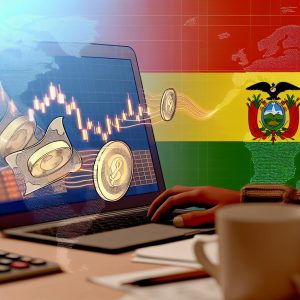
Trading USD/BOB: Opportunities and Challenges
Introduction



The trading of the United States Dollar (USD) against the Bolivian Boliviano (BOB) represents an avenue filled with unique challenges and potential advantages for traders. This currency pair, though not as widely recognized as some major global pairs, holds its own distinct appeal due to the economic dynamics of both the United States and Bolivia. Navigating the fluctuations of the USD/BOB exchange requires an astute understanding of the various economic and political factors influencing these currencies. This article delves into the intricacies of USD/BOB trading, focusing on the opportunities it presents and the challenges it poses to traders.
Economic Background
The United States Dollar
The USD is a cornerstone of international currency markets and carries significant weight as the world’s primary reserve currency. Its value and stability are underpinned by the economic robustness of the United States. The US economy, characterized by diverse sectors such as technology, finance, and consumer goods, maintains its position as a global economic powerhouse. Factors influencing the USD include Gross Domestic Product (GDP) growth, employment statistics, and monetary policies determined by the Federal Reserve. Typically, positive economic indicators bolster the USD, enhancing its liquidity and attractiveness in foreign exchange markets. Given its integral role, the USD frequently provides a benchmark for evaluating other global currencies.
The Bolivian Boliviano
In contrast to the USD, the Bolivian Boliviano (BOB) is a less visible participant on the global currency stage. However, it is essential within the Bolivian economy, which relies heavily on agriculture, mining, and the energy sector. Bolivia’s economic landscape is susceptible to shifts in commodity prices, specifically minerals and hydrocarbons. Furthermore, political stability and governmental policies in Bolivia can significantly affect the value and stability of the BOB. The country’s financial policies and the central bank’s interventions play roles in determining the strength of the Boliviano in comparison to more globally traded currencies.
Opportunities in Trading USD/BOB
Market Volatility
One of the central opportunities in trading the USD/BOB pair is the inherent market volatility associated with the BOB. While the USD is typically stable, the BOB’s value can fluctuate owing to various domestic influences. Political developments, changes in commodity prices, and economic policy shifts in Bolivia often introduce volatility into the currency market. Traders equipped to anticipate or respond to these rapid changes can potentially realize significant gains.
Diversification
USD/BOB trading presents an avenue for diversification in investment portfolios, particularly for investors seeking to spread risk across various asset classes. By incorporating a currency pair that exhibits a different volatility and risk profile compared to more stable pairs, investors can potentially buffer against losses elsewhere. This diversification may aid in ensuring balanced portfolio performance amid global economic shifts.
Arbitrage Opportunities
Arbitrage opportunities within the USD/BOB pair arise from discrepancies in interest rates and differing perceptions of economic stability between the US and Bolivia. Such discrepancies can occur due to asynchronous market information or reactions to geopolitical events. Traders adept in identifying and acting swiftly on these momentary discrepancies can gain from buying and selling currencies in different markets to profit from the price differentials.
Challenges in Trading USD/BOB
Liquidity Issues
Despite its potential benefits, trading USD/BOB is fraught with certain challenges, chief among them being liquidity issues. The USD/BOB pair typically exhibits lower liquidity than more prominent pairs like EUR/USD. Consequently, traders might encounter wider spreads and less optimal trading circumstances, potentially increasing transaction costs and reducing profit margins. Managing these liquidity constraints requires a strategic approach towards entry and exit points.
Political Influence
The political landscape in Bolivia can wield a profound influence over the BOB, often introducing volatility that can be difficult to predict. Events such as national elections, policy reforms, and international diplomatic shifts can all impact currency values. The uncertainty surrounding future political developments poses a challenge to maintaining stable forecasts and positions within the currency market.
Regulatory Aspects
Foreign investors venturing into the USD/BOB market must navigate Bolivia’s financial regulations, which can present additional hurdles. Comprehensive understanding and adherence to regulatory requirements are imperative to ensure compliance and facilitate effective trading practices. Regulatory policies may encompass a diverse array of economic actions, including capital controls and taxation, hence affecting the overall trading framework.
Conclusion
Trading the USD/BOB currency pair encapsulates a dynamic interplay of opportunities and challenges. Opportunities arise from market volatility, diversification benefits, and potential arbitrage scenarios. Conversely, challenges such as liquidity issues, political unpredictability, and regulatory compliance cannot be understated. For traders willing to delve into this market segment, maintaining a balanced, strategic approach informed by a deep understanding of both the United States and Bolivian economies is critical. Developing in-depth knowledge of how macroeconomic factors, geopolitical events, and local regulations influence currency valuations is key to successfully navigating USD/BOB trading. In the evolving landscape of global currency markets, preparedness and adaptability remain the cornerstones of effective trading strategies.
This article was last updated on: January 11, 2026